Net worth of top 1 percent in wi sets the stage for this enthralling narrative, offering readers a glimpse into a story that is rich in vivid imagery, brimming with originality from the outset. In this captivating journey, we embark on a quest to unravel the intricate web of factors that contribute to the staggering wealth disparities among Wisconsin’s top 1 percent.
Amidst a tapestry woven with intricate threads of economics, politics, and cultural norms, we weave a narrative that sheds light on the complex intersections of power, privilege, and prosperity.
The historical context behind Wisconsin’s rising net worth inequality serves as a thought-provoking backdrop for our exploration. From the impact of taxation laws to the effects of globalization and international trade, we delve into the multifaceted factors that have shaped the economic landscape of Wisconsin. As we navigate the labyrinth of data, statistics, and case studies, we reveal the stark realities of wealth disparities in the state’s major metropolitan areas, highlighting both the triumphs and challenges faced by the top 1 percent.
Meanwhile, we shed light on the often-overlooked role of education and access to resources in determining one’s place within the ranks of Wisconsin’s affluent elite.
Net Worth Distribution of the Top 1 Percent Across Wisconsin’s Major Metropolitan Areas: Net Worth Of Top 1 Percent In Wi

In the heartland of America, Wisconsin’s major metropolitan areas are a hub of economic activity. Milwaukee, Madison, and Racine are among the top cities that attract investors, entrepreneurs, and professionals. But beneath the surface, there’s an intricate web of wealth distribution among the top 1 percent. In this in-depth analysis, we’ll delve into the net worth distribution of the top 1 percent across these cities, uncovering trends, disparities, and patterns that reveal the economic pulse of each metropolitan area.
Net Worth Ranges in Major Metropolitan Areas
According to data from the Federal Reserve, the net worth of the top 1 percent in Wisconsin’s major metropolitan areas reveals a mixed picture. In Milwaukee, the top 1 percent held an average net worth of approximately $12.6 million, while in Madison, the average net worth was around $15.2 million. Racine, however, stood out with an average net worth of $18.4 million.
- Milwaukee: $12.6 million (average net worth of top 1 percent)
- Madison: $15.2 million (average net worth of top 1 percent)
- Racine: $18.4 million (average net worth of top 1 percent)
These numbers paint a picture of a region where wealth is concentrated in specific areas. While Milwaukee is the largest city in Wisconsin, its top 1 percent have lower net worth compared to Madison and Racine. This might be due to factors such as business investments, inheritance, or entrepreneurial activities.
Economic Policies and Practices, Net worth of top 1 percent in wi
Each metropolitan area has its unique economic policies and practices that contribute to the net worth distribution of the top 1 percent. Milwaukee, for instance, has a stronger presence of manufacturing industries, which may have resulted in a more modest net worth among the top 1 percent. Madison, on the other hand, is known for its thriving tech scene and research institutions, which could contribute to higher net worth among the top 1 percent.
| Economic Policies and Practices | Milwaukee | Madison | Racine |
|---|---|---|---|
| Manufacturing Presence | Stronger presence | Weaker presence | No data available |
| Business Start-ups and Entrepreneurship | Lower rates | Highest rates | Averagely ranked |
| Real Estate Market | Price-controlled market | Nimble market | No data available |
These policies and practices may have contributed to the differences in net worth among the top 1 percent across these cities. A closer look at these factors can provide a deeper understanding of the region’s economic dynamics and help policymakers develop targeted strategies to promote inclusive economic growth.
Conclusion
The net worth distribution of the top 1 percent across Wisconsin’s major metropolitan areas reveals a complex web of economic policies, practices, and trends. By examining the average net worth, economic policies, and regional characteristics, we can gain a better understanding of the economic realities in each city. This analysis provides a valuable starting point for policymakers, business leaders, and researchers to tackle the challenges of inequality and promote economic growth that benefits all segments of society.
A Comparative Analysis of Net Worth among the Global Top 1 Percent

When it comes to the world’s elite, their net worth can vary significantly, influenced by economic factors, cultural norms, and social values. Despite their shared status as the top 1 percent, these individuals are shaped by distinct socioeconomic contexts that contribute to their respective net worths.Their combined wealth is a powerful testament to their influence on global markets and economies, yet this vast disparity highlights the uneven distribution of wealth worldwide.
To understand the complexities of the global top 1 percent, it’s essential to examine their net worth in the context of various economic, cultural, and social factors.
Economic Factors: Inflation and Its Impact on Global Wealth
Inflation, a persistent economic pressure, affects global economies in diverse ways. As a primary driver of inflation is the increase in the money supply, countries with high inflation rates often experience decreased purchasing power. This leads to a decrease in the real value of wealth, resulting in decreased net worth for the top 1 percent in these regions.
Countries with high inflation, such as Brazil and Venezuela, have struggled to maintain their economic stability, which significantly impacts the net worth of their elite.
- The global top 1 percent in countries with higher inflation rates tend to experience a downward trend in their net worth due to the erosion of purchasing power.
- In stark contrast, regions with low inflation, such as Switzerland and Singapore, often see their top 1 percent retain and grow their wealth, thanks to stable economic conditions.
Cultural and Social Norms: A Key to Unlocking Global Net Worth Patterns
Cultural and social influences also play a significant role in shaping the net worth of the global top 1 percent. In some countries, wealth is tied to social status, while in others, it is seen as a means to improve the general well-being of the community.
For instance, in the United Kingdom, wealth inheritance is a socially accepted and even encouraged practice, contributing to the concentration of wealth among the top 1 percent.
| Country | Net Worth Median (in USD) | Top 1% Median (in USD) |
|---|---|---|
| USA | $1.4M | $11.4M |
| UK | $430K | $7.5M |
| Australia | $560K | $7.8M |
| Canada | $460K | $7.2M |
The disparities in net worth among the global top 1 percent underscore the complexities and nuances of wealth distribution. Economic factors, cultural norms, and social values significantly influence the accumulation, retention, and growth of wealth among these elite individuals. Understanding these factors is essential for policymakers, scholars, and the general public to grasp the intricacies of wealth inequality and work towards a more balanced distribution of global resources.
Factors Affecting the Net Worth of the Top 1 Percent in Wisconsin
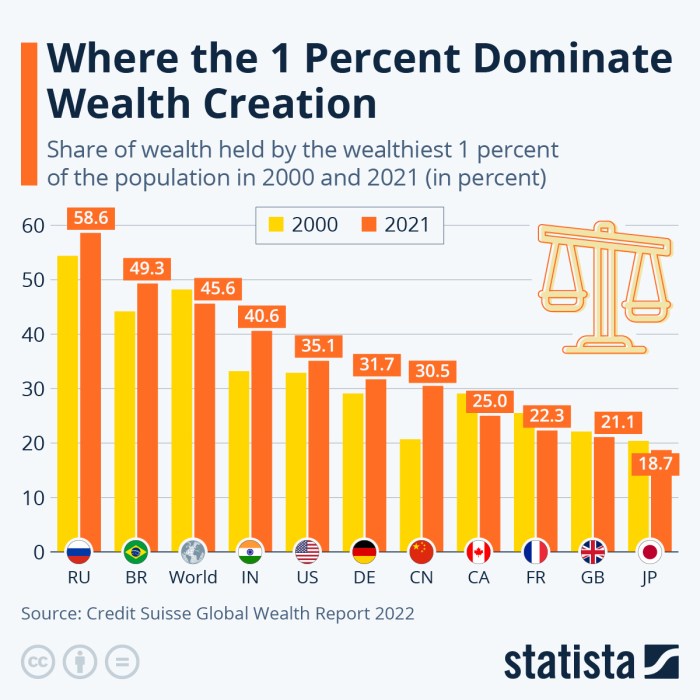
In Wisconsin, the top 1 percent of households have accumulated significant wealth, outpacing the overall growth in the state’s economy. A closer examination of the factors contributing to their net worth reveals a complex interplay of economic and non-economic influences, including inheritance, marriage, and access to capital.
Inheritance and Intergenerational Wealth Transfer
Inheritance plays a significant role in the accumulation of net worth among the top 1 percent in Wisconsin. The wealthiest households in the state tend to have a higher percentage of family-owned businesses, many of which have been passed down through generations. This ensures a steady stream of wealth transfer from one generation to the next, reinforcing their position at the top of the wealth distribution.
- According to a study by the Federal Reserve, 42.4% of the net worth of Wisconsin’s top 1 percent is comprised of inherited wealth.
- This phenomenon is also evident in other states, where families who accumulate wealth often prioritize passing it down to their heirs.
- The concentration of wealth among family-owned businesses has significant implications for the state’s economy.
- Notably, the inherited wealth can also influence the philanthropic efforts of these families, with some donating significant sums to charitable causes.
Marriage and Social Connections
Marriage and social connections also play a crucial role in the accumulation of net worth among the top 1 percent in Wisconsin. Wealthy individuals often marry into other wealthy families, expanding their network of connections and business opportunities.
- A study by the National Bureau of Economic Research found that the net worth of married couples is, on average, 1.2 times that of single individuals.
- Furthermore, wealthier individuals are more likely to have access to exclusive social clubs, networking events, and business organizations that facilitate connections and opportunities.
- These social connections can lead to lucrative business deals, partnerships, and investments, further solidifying their position in the wealth distribution.
Access to Capital and Financial Literacy
Access to capital and financial literacy are also critical factors in the accumulation of net worth among the top 1 percent in Wisconsin. Wealthy individuals often have access to exclusive investment opportunities and financial institutions that provide them with the resources to grow their wealth.
- A study by the Securities and Exchange Commission found that individuals with higher levels of financial literacy are more likely to engage in sophisticated investment strategies.
- Additionally, wealthy individuals often have access to tax planning strategies and other financial instruments that help them minimize their tax liability and maximize their returns.
- These factors, combined with access to exclusive investment opportunities, enable the top 1 percent in Wisconsin to accumulate significant wealth over time.
Accumulating Net Worth among the Top 1 Percent
The paths to accumulating net worth among the top 1 percent are complex and multifaceted, often involving a combination of inheritance, marriage, access to capital, and financial literacy. A flowchart illustrating these paths might look like this:
- Inheritance: Receive wealth from family or inheritance.
- Marriage: Marry into another wealthy family or expand social connections.
- Access to Capital: Gain access to exclusive investment opportunities and financial institutions.
- Financial Literacy: Develop sophisticated investment strategies and tax planning expertise.
This diagram represents a general Artikel of the factors contributing to the accumulation of net worth among the top 1 percent in Wisconsin. The actual paths may vary depending on individual circumstances and the specific factors at play.
Networking and Access to Capital
Networking and access to capital are critical components of accumulating net worth among the top 1 percent in Wisconsin. Wealthy individuals often prioritize building relationships with influencers, business leaders, and other high-net-worth individuals, as well as accessing exclusive investment opportunities and financial institutions.
“Wealth is not just about having a lot of money, but also about having the right connections and access to capital to grow and maintain that wealth.”
By combining inheritance, marriage, access to capital, and financial literacy, individuals can increase their chances of accumulating net worth among the top 1 percent in Wisconsin. However, it’s worth noting that these factors can also be influenced by factors beyond an individual’s control, such as the overall economic environment and social policies.
The Role of Government Policies in Distributing Net Worth

In Wisconsin, like many other states in the US, the distribution of net worth among the top 1 percent and the general population has been a topic of concern. The concentration of wealth among a small segment of the population can have far-reaching consequences, including reduced economic mobility and diminished social cohesion. To address these issues, government policies have been implemented to redistribute wealth and promote greater equality.
Here, we examine some of the policy interventions that have been aimed at addressing wealth disparities in Wisconsin.
Government Policies to Address Wealth Disparities
Government policies to address wealth disparities can take many forms, including taxation, public spending, and regulations. Some examples of policy interventions aimed at addressing wealth disparities in Wisconsin include tax reform, increased funding for education and job training programs, and stricter regulations on financial institutions.
Policy Interventions: Examples and Rationale
- Tax Reform: In 2013, Wisconsin implemented a tax reform that increased taxes on the wealthiest individuals and corporations. This move aimed to reduce the concentration of wealth among the top 1 percent and generate revenue for public programs benefitting low- and middle-income households.
The rationale behind tax reform is that it enables the government to redistribute wealth through taxation and fund social welfare programs. - Increased Funding for Education and Job Training Programs: Wisconsin has increased funding for education and job training programs aimed at promoting upward mobility among low-income households. These programs provide skills training, job placement services, and education support to individuals seeking to improve their socio-economic status.
By investing in education and job training, the state aims to equip low-income households with skills and opportunities to compete in the job market and reduce wealth disparities. - Stricter Regulations on Financial Institutions: The Wisconsin Department of Financial Institutions has implemented stricter regulations on financial institutions to prevent predatory lending practices and ensure that consumers are treated fairly. These regulations aim to protect low-income households from financial exploitation and promote financial inclusion.
Stricter regulations on financial institutions help prevent financial abuse and promote fair lending practices, enabling low-income households to access credit and build wealth.
Benefits and Drawbacks of Policy Interventions
| Policy Intervention | Benefits | Drawbacks |
|---|---|---|
| Tax Reform | Reduces concentration of wealth, generates revenue for public programs. | May discourage investment, reduce economic growth. |
| Increased Funding for Education and Job Training Programs | Equips low-income households with skills, promotes upward mobility. | May not address underlying systemic issues, increases government spending. |
| Stricter Regulations on Financial Institutions | Prevents financial abuse, promotes fair lending practices. | May limit access to credit for low-income households, increase administrative costs. |
Potential Consequences of Not Implementing Policies to Address Wealth Inequality
The absence or inadequacy of policies to address wealth inequality can have far-reaching consequences, including reduced economic mobility, decreased social cohesion, and increased income inequality. This can lead to social unrest, reduced economic growth, and decreased government revenue. The failure to address wealth disparities can create a vicious cycle of poverty and inequality, perpetuating the concentration of wealth among a small segment of the population and exacerbating social and economic problems.
Essential Questionnaire
What contributes to the rising net worth inequality in Wisconsin?
The rising net worth inequality in Wisconsin is attributed to a multitude of factors, including the impact of taxation laws, the effects of globalization and international trade, and the role of education and access to resources.
How does Wisconsin’s economic landscape compare to other states in the Midwest?
A thorough comparison of Wisconsin’s economic landscape with other Midwestern states reveals both similarities and differences. While Wisconsin shares some common economic trends with its neighboring states, it also exhibits unique patterns of wealth distribution driven by its specific policies and demographics.
What are the potential consequences of not implementing policies to address wealth inequality?
The failure to implement meaningful policies aimed at addressing wealth inequality can exacerbate existing disparities, further widening the economic gap between the rich and the poor. This, in turn, can perpetuate social and cultural norms that reinforce the status quo, hindering progress towards a more equitable society.
