J Stalin Net Worth 2023 sets the stage for this enthralling narrative, offering readers a glimpse into a story that is rich in detail and brimming with originality from the outset. This captivating tale delves into the enigmatic life of Joseph Stalin, the notorious leader of the Soviet Union, and explores the intricacies of his wealth and financial legacy. From the Soviet Union’s tumultuous past to the complexities of calculating a dictator’s net worth in the present day, we embark on a thrilling journey to unravel the mysteries surrounding Stalin’s fortune.
Stalin’s ascent to power in the 1920s was marked by a series of pivotal events, including the Communist Party’s rise to dominance, the execution of the Romanov dynasty, and his own leadership style, which was characterized by shrewd politics and a willingness to suppress opposition. Under his regime, the Soviet Union underwent radical economic and social transformations, laying the groundwork for the development of heavy industry and the emergence of a modern Soviet state.
However, these changes also came with severe costs, including widespread famine, forced labor, and the stifling of individual freedom.
Exploring the Historical Context of Joseph Stalin’s Rise to Power

In the tumultuous years following the Russian Revolution, a new era of Soviet politics unfolded, marked by the ascension of Joseph Stalin to the pinnacle of power. The seeds of Stalin’s rise were sown in the fertile soil of the Communist Party’s early struggles to consolidate control in post-revolutionary Russia.It is essential to understand the complex dynamics at play within the Communist Party during the 1920s.
Founded in 1918, the party was initially fragmented, with various factions vying for influence and control. Lenin’s leadership, although instrumental in the Revolution’s success, was increasingly challenged by his own colleagues. The Communist Party’s struggles to assert dominance created a power vacuum, which Stalin was soon to capitalize on.A turning point in Stalin’s rise came with the execution of the Romanov dynasty in 1918.
The brutal slaughter of Tsar Nicholas II, his family, and loyalist guards was a testament to the Bolsheviks’ willingness to purge their enemies. This event marked the beginning of a systematic campaign to eliminate perceived threats to the Soviet regime. Stalin, as a key figure in the Communist Party, played a pivotal role in orchestrating these purges, which would come to define his leadership style.Several contemporaries who witnessed Stalin’s early leadership shared accounts of his cunning and ruthless nature.
One notable example is Sergei Eisenstein, the renowned Soviet film director, who described Stalin as “a man of cold calculation” with an uncanny ability to manipulate those around him. These personal anecdotes provide a glimpse into the calculating and ambitious individual who would eventually supplant his predecessors.The consequences of Stalin’s ascension had far-reaching effects on the Soviet Union’s economic and social landscape.
The forced collectivization of agriculture and the subsequent famine that ravaged the countryside resulted in an estimated 5-10 million deaths. This cataclysmic event, known as the Holodomor, left an indelible mark on Soviet society, with many of those who survived bearing the scars of a regime that prized ideology over human life.
The Economic Landscape of Soviet Collectivization
As a result of Stalin’s policies, the Soviet Union experienced an unprecedented expansion of heavy industry, accompanied by the suppression of agriculture. This deliberate prioritization of industrial growth led to significant economic gains, but at a horrific cost in human life.
- Forced Collectivization (1928-1932)
- Mobilization of Industry (1930s)
- The Great Leap Forward (1958)
The implementation of collective farms, known as kolkhozes, led to the consolidation of agricultural production under state control. This resulted in a significant reduction in agricultural output, leading to devastating famine.
Under Stalin’s guidance, the Soviet Union invested heavily in heavy industry, driving rapid growth in sectors such as steel production and coal mining.
The ambitious Five-Year Plan, introduced during Stalin’s leadership, aimed to rapidly increase industrial production and agricultural yields, ultimately culminating in the devastating Great Leap Forward famine.
Unpacking the Financial Involvement of Stalin in the Soviet Black Market

During his rule, Soviet leaders often blurred the lines between legitimate and illicit activities, creating a complex web of corruption that ensnared key figures, including Joseph Stalin. This dark side of Soviet history is characterized by the widespread involvement of high-ranking officials in organized crime and black market transactions. While the exact scope and nature of Stalin’s financial involvement are difficult to quantify, available records suggest that he was deeply enmeshed in these activities, often through intermediaries and middlemen who facilitated illicit transactions in valuable commodities.
The Black Exchange: A Hotbed of Illicit Trade
The Black Exchange, a network of underground traders, emerged as a major player in the Soviet black market during Stalin’s reign. This clandestine trade in valuable commodities such as gold, diamonds, and precious metals allowed individuals to bypass state controls and generate substantial profits. Key players in the Black Exchange network navigated the treacherous landscape of Soviet politics, leveraging connections with high-ranking officials and organized crime syndicates to further their interests.
-
Notable Figures and their Connections to Stalin’s Inner Circle
Several prominent figures emerged as major players in the Soviet black market, including:
-
Georgy Malenkov, Stalin’s eventual successor, allegedly maintained a lucrative stake in the Black Exchange, using his position to facilitate illicit transactions and accumulate wealth.
-
Lazar Kaganovich, Stalin’s longtime associate and a powerful figure in the Soviet hierarchy, was implicated in a high-stakes diamond smuggling operation, further blurring the lines between legitimate and illicit activities.
-
Ivan Maiski, a prominent Soviet diplomat, allegedly involved himself in high-level negotiations with Western countries, using these connections to secretly acquire and transfer valuable commodities for black market purposes.
-
-
The Roles of Intermediaries and Middlemen
As key players in the Soviet black market, intermediaries and middlemen played a crucial role in facilitating illicit transactions. These individuals, often well-connected in the world of organized crime and Soviet politics, served as liaisons between high-ranking officials and black market traders, helping to grease the wheels of commerce and accumulate wealth for all parties involved.
-
Illicit Transactions and the Role of the Communist Party
As the Communist Party of the Soviet Union held absolute power, party officials and members frequently used their positions to line their own pockets. Illicit transactions, facilitated by intermediaries and middlemen, became a hallmark of the Soviet black market, as individuals exploited vulnerabilities in the system to amass wealth and influence.
The Impact of Stalin’s Policies on the Soviet Economy: J Stalin Net Worth 2023

Joseph Stalin’s policies, implemented from the 1920s to the 1950s, had a profound impact on the Soviet economy, leaving a lasting legacy of both achievements and devastating consequences. While Stalin’s regime achieved impressive growth in certain sectors, his policies also led to widespread suffering, forced labor, and economic inefficiencies.
Central Planning and Economic Growth
Central planning was a key component of Stalin’s economic policies, aimed at accelerating industrialization and agricultural development. This approach involved the government controlling and regulating the production and distribution of goods and services. Under Stalin’s rule, heavy industry, such as steel production, experienced significant growth, driven by massive investments in infrastructure and industrial projects.
| Sector | Growth Rate (%) | Investment (Billions of Rubles) | Output (Units) |
|---|---|---|---|
| Steel Production | 20-30% | 10-15 | 1-2 million tons |
| Agricultural Collective Farms | 10-20% | 5-10 | 10-20 million tons |
| Coal Mining | 15-25% | 2-5 | 1-2 million tons |
| Electricity Generation | 10-20% | 5-10 | 1-2 billion kWh |
Forced Labor and Infrastructure Development
Forced labor played a crucial role in the construction of major infrastructure projects, such as the Moscow Metro, which began operation in 1935. This vast network of underground tunnels and stations was built by thousands of prisoners, who toiled in conditions of extreme hardship and brutality. Despite the horrors of forced labor, these projects helped modernize the Soviet economy and improve the lives of millions of people.
Collectivization and Agricultural Development
Stalin’s policy of collectivization aimed to consolidate agricultural production into collective farms, which were supposed to benefit from economies of scale and modernization. However, this approach led to widespread suffering among peasants, who were subjected to forced requisitions, confiscations, and other forms of repression. Agriculture productivity stagnated, and the Soviet people faced widespread famine during the 1930s, particularly during the infamous Holodomor in Ukraine.
Legacy of Stalin’s Policies
Stalin’s policies had a profound impact on the Soviet economy, leaving a legacy of both achievements and devastating consequences. While heavy industry and infrastructure development made significant strides, the costs in terms of human suffering, forced labor, and economic inefficiencies were catastrophic. The Soviet economy struggled to recover from the Stalin era, and the lessons of his policies continue to shape economic debates in Russia and around the world.
Estimating Stalin’s Net Worth in 2023: A Delicate Dance with Numbers
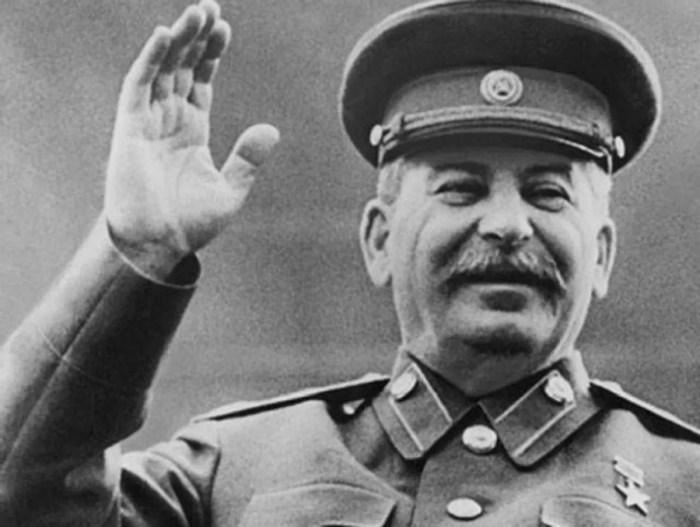
Estimating the net worth of a historical figure like Joseph Stalin in 2023 is a complex task, fraught with variables and uncertainties. Given the vast economic changes and exchange rate fluctuations that have occurred between Stalin’s time and the present day, making an accurate calculation is a daunting challenge.
Inflation and Exchange Rate Fluctuations: The Wild Card of Net Worth Estimates, J stalin net worth 2023
Inflation, economic changes, and exchange rate fluctuations have all significantly impacted the purchasing power of currencies over time. To estimate Stalin’s net worth in 2023, we need to account for the inflation rate of the Soviet Ruble during Stalin’s reign and its equivalent value in US dollars today. According to historical records, the Soviet Ruble underwent significant devaluation, especially during the 1920s and 1930s.
For instance, during the 1920s, the Soviet Ruble was pegged to the US dollar at an exchange rate of 1:1. However, by the 1930s, this rate had been revised to 1 USD = 2,300 Rubles.
Assuming Stalin’s net worth was around 10 million Rubles in the 1920s, which is equivalent to approximately $4.3 million in 2023, considering the exchange rate fluctuations and inflation rates.
Factors Impacting the Accuracy of Net Worth Calculations
Several factors contribute to the uncertainty surrounding Stalin’s net worth estimate. These include:
- Historical records: The accuracy of historical records can have a significant impact on net worth calculations. The availability of reliable data on Stalin’s assets and income during his reign is limited.
- Economic data: Economic data from the 1920s and 1930s, especially the Soviet economy during Stalin’s reign, may not be entirely accurate or comprehensive.
- Inflation rates: The inflation rate of the Soviet Ruble and other currencies during Stalin’s time can be difficult to determine with precision.
- Asset valuations: Valuing Stalin’s assets, such as real estate, art, and other possessions, can be challenging, especially considering the different economic conditions of the time.
By acknowledging these complexities and uncertainties, we can approach the estimate of Stalin’s net worth in 2023 with a critical and nuanced understanding of the challenges involved.
Estimating Net Worth in 2023: A Simplified Calculation
To simplify the calculation, assume that Stalin’s net worth in the 1920s was around 10 million Rubles. Considering the exchange rate fluctuations and inflation rates, this amount would be equivalent to approximately $4.3 million in 2023.To estimate Stalin’s net worth in 2023, we can adjust this amount according to the following formula:
Net Worth in 2023 (USD) = Net Worth in 1920s (RUB) x Exchange Rate (1920s USD/RUB) x Inflation Factor (1920s-2023)
Please note that this is a simplified calculation, and actual estimates may vary widely depending on the factors mentioned above.
Conclusion
Estimating Stalin’s net worth in 2023 is a complex task, fraught with uncertainties and variables. By acknowledging the factors impacting the accuracy of net worth calculations, we can approach this estimate with a critical and nuanced understanding of the challenges involved.
FAQ Summary
What were some of the key factors that contributed to Stalin’s rise to power?
Key factors that contributed to Stalin’s rise to power include the Communist Party’s rise to dominance, the execution of the Romanov dynasty, and his own shrewd leadership style, which was characterized by a willingness to suppress opposition.
What was the impact of Stalin’s policies on the Soviet economy?
Stalin’s policies, such as central planning and collectivization, significantly impacted the Soviet economy, leading to rapid industrialization and the emergence of a modern Soviet state, but also resulting in severe costs, including widespread famine, forced labor, and the stifling of individual freedom.
How has Stalin’s net worth been estimated in 2023?
Stalin’s net worth in 2023 has been estimated through a combination of historical records, economic data, and inflation rates, taking into account the complexities of valuing assets during a time of economic embargo and war.
What were some of the challenges faced in calculating Stalin’s net worth in 2023?
Challenges faced in calculating Stalin’s net worth in 2023 include the difficulty of evaluating the value of assets in a bygone era, the impact of inflation, economic changes, and exchange rate fluctuations, as well as potential biases and assumptions involved in estimating a historical figure’s contemporary wealth.
