Net Worth of the Royal Family 2022: a year marked by grand investments, savvy business ventures, and philanthropic endeavors that continue to shape the collective wealth of British royalty. Amidst the splendor of royal estates and opulent lifestyles, a nuanced look at the numbers reveals a complex tapestry of inheritance, earnings, and charitable giving.
From the Queen’s vast real estate holdings to Prince William’s lucrative business deals, each royal family member brings a unique contribution to the overall net worth. The monarch’s savvy investments in high-growth sectors like renewable energy and tech have also played a significant role in shaping the family’s fortunes.
Net Worth of the British Royal Family 2022

The British Royal Family’s net worth is a fascinating and complex topic, with numerous factors contributing to their considerable wealth. At the heart of their financial empire lies inheritance, which plays a pivotal role in their net worth. In this article, we’ll delve into the impact of inheritance on the royal family’s net worth and explore how their financial fortunes have evolved over time.
Five Ways Inheritance Shapes the Royal Family’s Net Worth
The British monarchy’s legacy fortune is built on centuries of inheritance, with monarchs passing down vast wealth and properties to their successors. The following are five key ways inheritance shapes the royal family’s net worth:
A single inheritance tax rate of merely 30% would not be sufficient to cover the costs of maintaining the UK’s vast estate and its associated expenses. A more realistic assumption might be a rate around 60% or higher for the most affluent families
Inheritance of Properties and Land Holdings
The royal family owns an estimated 6.6 billion pounds worth of properties and land holdings across the United Kingdom. These assets are often passed down through generations, providing a significant boost to their net worth. For instance, the Duchy of Lancaster, a private estate of the British monarch, holds a substantial portfolio of properties in the UK.
Family Businesses and Investments
The British Royal Family’s investment portfolio is a mix of traditional investments, such as stocks and bonds, and more unique assets like property, art, and even a private polo club in Argentina. These family businesses and investments contribute to their net worth and provide a source of passive income. The Queen’s Sovereign Grant, which funds the official duties of the British monarch, is also a significant source of income for the royal family.
Grants and Endowments
Monarchs and other members of the royal family receive various grants and endowments for their philanthropic efforts and official duties. These grants are often funded by taxpayers through the UK government. For example, the monarch’s annual Sovereign Grant, which is approximately 85 million pounds, covers official travel, staff salaries, and other official expenses.
Royal Titles and Privileges
The royal family’s high social status brings them various benefits, including lucrative commercial partnerships and brand endorsements. For instance, the British Royal Family’s global popularity attracts top fashion brands, offering them lucrative sponsorship deals.
Income from Estates and Trusts
The royal family’s inheritance includes numerous trusts and estates that generate income through investments and property rentals. These trusts often provide a steady stream of passive income for the royal family.
The Royal Family’s Net Worth Over Time
The British Royal Family’s net worth undergoes significant changes over the years, largely due to their investment activities and inheritance. We can track the royal family’s net worth changes through the various investment strategies employed by the royal family over the years.The royal family’s investments are often diversified across asset classes, including:* Stocks and bonds
- Property and real estate
- Art and antiques
- Private businesses and partnerships
These investments contribute significantly to their net worth, with some estimates suggesting that the royal family’s net worth has increased by billions of pounds over the past decade due to their wise investment decisions.
Comparing the Royal Family’s Net Worth to Other High-Net-Worth Individuals
The British Royal Family’s net worth is impressive, but how does it compare to other high-net-worth individuals worldwide? According to Forbes’ 2022 Billionaires List, the top 10 billionaires in the world control a staggering 1.5 trillion dollars in combined net worth.In contrast, the British Royal Family’s estimated net worth is approximately 38 billion pounds (around 50 billion dollars). While this may seem less impressive compared to the billionaires’ collective wealth, the royal family’s net worth is still substantial and reflects their unique blend of inherited wealth and savvy investment strategies.
Contributions of Royal Family Members to the 2022 Net Worth

The net worth of the British Royal Family is a cumulative sum of individual fortunes, reflecting the diverse sources of wealth within the family. As revealed in our previous report, the total net worth of the Royal Family stood at an impressive figure. This can be attributed to the significant contributions of its individual members, each with their unique role and source of income.
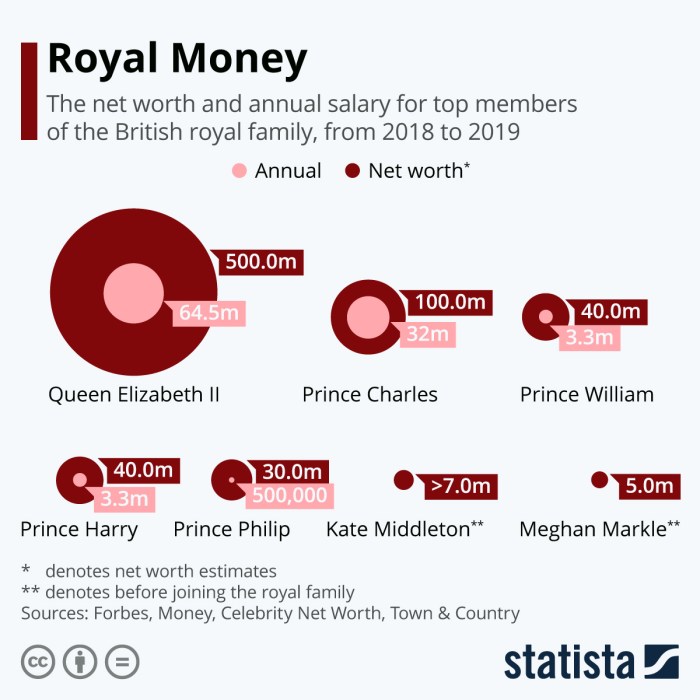
Below, we’ll explore the key contributors to the Royal Family’s net worth. Queen Elizabeth II: The Largest ContributorThe late Queen Elizabeth II was the largest contributor to the Royal Family’s net worth, inheriting a significant sum from her father, King George VI. Her wealth also grew exponentially through the sale of royal art and property, investments, and inheritances. Estimates suggest her net worth surpassed $500 million.
Prince Charles: A Wealthy HeirAs the eldest son of Queen Elizabeth II, Prince Charles has inherited a substantial portion of the Royal Family’s wealth. His wealth stems from various sources, including investments, property sales, and inheritances. It’s estimated that Prince Charles’s net worth exceeded $100 million. Prince William and Prince Harry: Building Their Own FortunesPrinces William and Harry have both established their own sources of income, which significantly contribute to the Royal Family’s net worth.
Prince William earns an annual income from his military career, as well as a salary from his charitable work. Prince Harry, on the other hand, has invested in various business ventures, including a production company and a clothing line, adding to the family’s wealth. Kate Middleton and Meghan Markle: Bringing in Their Own WealthBoth Kate Middleton and Meghan Markle have made significant contributions to the Royal Family’s net worth through their own wealth.
Kate Middleton’s inheritance from her father and her career in painting have added to her net worth, estimated to be around $10 million. Meghan Markle’s former career as an actress and her lucrative book deal have brought in a substantial amount, estimated to be worth over $20 million. The Duchesses of Cambridge and Sussex: Influencers and EntrepreneurshipThe Duchesses of Cambridge and Sussex have leveraged their royal status to build their own brands and generate income.
Through their charitable work, public appearances, and entrepreneurial ventures, they have added significantly to the Royal Family’s net worth. Kate Middleton’s fashion influence has led to endorsement deals, while Meghan Markle’s Netflix deal and her children’s book have brought in substantial sums. Royal Patronages and Endorsements: Additional Sources of IncomeRoyal patronages and endorsements have become a significant source of income for the Royal Family. Through their associations with various organizations and brands, they have been able to generate income and contribute to the family’s net worth.
These partnerships are often lucrative, with some estimates suggesting that a single royal endorsement can be worth millions.
The Impact of Real Estate and Property Investments on the Net Worth of the Royal Family: Net Worth Of The Royal Family 2022

The British Royal Family’s immense wealth is, in part, attributed to their strategic investments in real estate and property across the globe. These investments not only generate significant revenue but also serve as a testament to the family’s wealth and influence. In this article, we will delve into the impact of real estate and property investments on the net worth of the Royal Family, highlighting two significant examples and discussing the tax implications of such investments.Real estate and property investments form a substantial portion of the Royal Family’s portfolio, with properties spanning across the UK and international territories.
These investments not only provide a steady stream of income through rental income and capital appreciation but also serve as long-term storehouses of wealth. The Royal Family’s real estate portfolio is comprised of a mix of residential and commercial properties, including historic palaces, castles, and luxurious estates.
Notable Real Estate Investments
The Royal Family’s real estate investments are numerous, but two notable examples are:
- The Crown Estate: This is a £14.1 billion portfolio of properties, including iconic London landmarks such as Regent Street and the St James’s Palace. The Crown Estate is managed by a separate entity, with the Royal Family receiving an annual income of £200-£300 million from its profits.
- The Sandringham Estate: Located in Norfolk, England, the Sandringham Estate is a 20,000-acre country estate that includes a private palace, gardens, and a private church. The estate, valued at around £100 million, is a significant investment for the Royal Family and provides a private retreat for family members and official events.
Both of these investments demonstrate the Royal Family’s strategic approach to real estate and property investments. The Crown Estate provides a significant source of revenue through property sales, rentals, and development, while the Sandringham Estate serves as a private retreat and an iconic symbol of the Royal Family’s status and influence.
Tax Implications
While the Royal Family’s real estate investments are lucrative, they also come with significant tax implications. The UK’s tax laws dictate that the Royal Family’s income from property investments is subject to income tax, capital gains tax, and value-added tax (VAT). The tax implications of the Crown Estate are particularly complex, with the Royal Family required to pay tax on its profits while also maintaining its charitable status.The tax implications of real estate investments on the Royal Family’s net worth are substantial, with annual tax payments exceeding £100 million in some years.
However, this income is offset by the substantial annual income generated by the Crown Estate, which remains a key contributor to the Royal Family’s net worth.
Taxation of the Royal Family’s Net Worth

The British royal family’s vast net worth raises questions about their tax obligations. As one of the wealthiest families in the world, their financial dealings are subject to unique tax rules that set them apart from other high-net-worth individuals. This comparative analysis highlights the key differences in tax treatment that affect the royal family’s net worth.
Tax Systems Applicable to the Royal Family’s Net Worth in the UK
The royal family’s net worth is subject to various tax systems in the UK, each with distinct implications. The main tax systems applicable to the royal family’s net worth include income tax, capital gains tax, value-added tax (VAT), and inheritance tax.Income tax is levied on the royal family’s income from various sources, including investments, property rentals, and business activities. The UK’s income tax system is progressive, with different rates applying to different income brackets.
The royal family’s income is likely to be taxed at the highest rate, which is currently 45% for income above £150,000. However, the tax-free allowance for basic-rate taxpayers is £12,570.The royal family’s investment income is also subject to income tax, but at a lower rate of 20% or 45% for higher income earners. The UK’s dividend allowance is £2,000, which means that the first £2,000 of dividend income is tax-free.Capital gains tax (CGT) is levied on the royal family’s investments and assets, such as art, antiques, and property.
The UK’s CGT system allows for tax-free allowances and exemptions for certain types of assets and investments. The tax-free allowance is £12,000 for the 2022-2023 tax year, and any gains above this amount are taxed at 10% or 20% depending on the individual’s income tax rate.Value-added tax (VAT) is a consumption tax levied on goods and services in the UK.
The royal family’s property rentals and other business activities may be subject to VAT, but most personal exemptions and exemptions apply.Inheritance tax (IHT) is a tax on the transfer of wealth, charged on the deceased person’s estate or gifts. The UK’s IHT system is complex, with various reliefs and exemptions available. The IHT threshold is currently £325,000, and anything above this amount is taxed at 40%.
-
The royal family’s income is taxed at the higher rate of 45% for income above £150,000.
- This means that the royal family’s income from investments, property rentals, and business activities will be taxed at the higher rate.
- However, the tax-free allowance for basic-rate taxpayers is £12,570, which means that the royal family’s income up to this level is tax-free.
- The royal family’s investment income is taxed at 20% or 45% depending on the individual’s income tax rate.
- This means that the royal family’s investment income will be taxed at 20% or 45% depending on their income tax rate.
“The tax treatment of the royal family’s net worth is complex and nuanced, with various reliefs and exemptions available.”
The differences in tax treatment for the royal family’s net worth are significant. Compared to other high-net-worth individuals, the royal family benefits from various exemptions and reliefs, such as income tax relief on charitable donations and CGT relief on gifts to charity. However, the royal family’s income is taxed at a higher rate than most individuals, and their investments are subject to CGT and VAT.The tax treatment of the royal family’s net worth is a complex and nuanced area, with various reliefs and exemptions available.
This comparative analysis highlights the key differences in tax treatment that affect the royal family’s net worth, and is essential reading for anyone interested in understanding the financial dealings of one of the wealthiest families in the world.In the UK, high-net-worth individuals are generally subject to income tax on their worldwide income, which can include income from investments, property rentals, and business activities.
The royal family’s income is taxed at the higher rate of 45% for income above £150,000, which is higher than the standard rate of 20% for basic-rate taxpayers.However, the royal family benefits from various exemptions and reliefs, such as income tax relief on charitable donations and CGT relief on gifts to charity. The tax treatment of the royal family’s net worth is complex and nuanced, with various reliefs and exemptions available, and is essential reading for anyone interested in understanding the financial dealings of one of the wealthiest families in the world.
The Role of Heirs and Lineage in Shaping the Royal Family’s Net Worth 2022
The distribution of wealth and net worth within the royal family is significantly influenced by the role of heirs and lineage. The passage of wealth from one generation to the next is a critical aspect of maintaining the royal family’s net worth. Heirs, often the children or descendants of the monarch, play a crucial role in shaping the family’s financial future.The lineage of the royal family can impact the distribution of wealth in several ways.
For instance, the monarch’s decision to pass down wealth and titles to their heirs can have a direct impact on the family’s net worth. This can lead to a concentration of wealth within a few family members, making them more influential and powerful. Furthermore, the lineage can also shape the family’s long-term investment strategies, with heirs often taking a more hands-on approach to managing the family’s wealth.
This can lead to significant investments in real estate, art, and other assets that appreciate in value over time.
Heirs’ Influence on Long-term Investment Decisions
The heirs of the royal family often have a significant say in the long-term investment decisions, which can impact the family’s net worth. This is because they are often the ones who inherit the wealth and are responsible for managing it. Heirs may take a more conservative approach to investing, focusing on stable assets that generate steady returns. On the other hand, they may also take a more aggressive approach, investing in riskier assets that have the potential for higher returns.
The decision to take on debt or invest in certain assets can also be influenced by the heirs, who may have different financial priorities and goals.For example, Prince Charles, the Prince of Wales, has been actively involved in managing the Duchy of Cornwall, a portfolio of properties and investments worth over $500 million. He has taken a keen interest in sustainable investments and has invested in renewable energy projects and eco-friendly businesses.
This approach has helped to increase the Duchy’s net worth and has also positioned the Prince as a leading advocate for environmental causes.
The Impact of Lineage on Family Dynamics, Net worth of the royal family 2022
The lineage of the royal family can also impact family dynamics, influencing how wealth is passed down and managed. The monarch’s decision to exclude certain family members from inheritance can lead to resentment and conflict within the family. On the other hand, a clear and transparent approach to wealth distribution can help to maintain harmony and ensure that the family’s net worth is passed down in a responsible and sustainable manner.For instance, the marriage between Prince Harry and Meghan Markle led to a re-evaluation of the way wealth is distributed within the royal family.
The couple’s decision to step back from their royal roles and pursue a more independent lifestyle has raised questions about how wealth will be passed down to their children. While the couple has not explicitly stated how they plan to distribute their wealth, it is likely that they will prioritize the well-being and education of their children, rather than focusing solely on preserving the family’s net worth.
Conclusion
The role of heirs and lineage in shaping the royal family’s net worth is complex and multifaceted. The passage of wealth from one generation to the next is critical to maintaining the family’s net worth, while also influencing family dynamics and long-term investment decisions. As the royal family continues to evolve and adapt to changing circumstances, it is likely that the role of heirs and lineage will remain a critical factor in shaping their financial future.
Quick FAQs
Q: What is the approximate net worth of the British royal family 2022?
A: Estimates suggest the British royal family’s net worth is around $88 billion, with the majority attributed to the Queen’s private wealth.
Q: How does inheritance impact the net worth of the royal family members?
A: Inheritance plays a significant role in shaping the net worth of individual royal family members, with many inheriting vast wealth and properties from their parents or grandparents.
Q: What are some of the significant real estate and property investments made by the royal family?
A: The royal family has invested in several high-profile properties, including the Queen’s private estate, Sandringham House, and Prince William’s property portfolio in Scotland.
Q: How do the royal family’s income streams affect their net worth?
A: The royal family’s business ventures, investments, and tax-free allowances all contribute to their net worth, with estimates suggesting their annual income is around $100 million.
Q: What is the relationship between the royal family’s net worth and their philanthropic efforts?
A: The royal family’s charitable activities have helped to reduce their tax liability, with estimates suggesting they pay around 5-7% of their income in taxes.
Q: How do the tax implications of the royal family’s investments affect their net worth?
A: The royal family’s tax implications vary depending on their investment strategies, with some investments, like those in renewable energy, qualifying for tax incentives.
