Average net worth of African American families is a complex and multifaceted issue, deeply rooted in historical and systemic factors that continue to impact economic stability and wealth accumulation. From redlining to discriminatory lending practices, the legacy of racism persists in shaping the financial trajectories of African American families.
Despite the progress made in addressing these issues, significant disparities remain, with African American families continuing to lag behind their white counterparts in terms of net worth. To truly understand this phenomenon, it’s essential to delve into the methods used to calculate net worth, the limitations of relying solely on household income, and regional variations that contribute to these disparities.
Understanding the Context of the Average Net Worth of African American Families

The average net worth of African American families has long been a source of concern, with a persistent gap between their financial stability and that of white families. This disparity is rooted in a complex web of historical events, systemic racism, and discriminatory practices that have impacted wealth accumulation for African American families. To understand the context of this issue, it’s essential to examine the historical factors that have contributed to this disparity.
Redlining and Segregation
The practice of redlining, where banks and other financial institutions refused to lend money to residents of certain neighborhoods, largely targeted African American communities. This deliberate exclusion from accessing credit had a devastating impact on wealth accumulation, as homeownership is a key factor in building net worth. African American families were forced to seek alternative, often predatory, financial options, such as high-interest loans or rental agreements, which further eroded their financial stability.
- Redlining led to concentrated poverty in African American neighborhoods, making it virtually impossible for residents to accumulate wealth.
- The absence of mainstream financial services forced families to rely on expensive alternatives, exacerbating financial insecurity.
- The lack of access to credit also limited African Americans’ ability to start businesses or invest in education, further hindering their economic prospects.
Discriminatory Lending Practices
Discriminatory lending practices, such as unequal interest rates and unfair loan terms, have long been a barrier to African American families’ ability to accumulate wealth. These practices, often justified as “risk-based” or “market-rate,” disproportionately affect African American borrowers, pushing them deeper into debt and making it more difficult for them to achieve financial stability.
“The racial wealth gap is not just a reflection of past injustices, but also a result of ongoing systemic racism,” says a leading expert in the field.
| Example | Consequence |
|---|---|
| African American borrower seeking a $100,000 mortgage with a 20% down payment | Higher interest rate (1.5% vs. 3.5% for white borrowers) |
Systemic Racism and Economic Well-being
Systemic racism continues to affect the economic well-being of African American families, perpetuating a cycle of financial insecurity. The legacy of redlining, segregation, and discriminatory lending practices has led to a persistent wealth gap, making it more challenging for African Americans to access resources, education, and opportunities essential for building wealth.
- African American families are less likely to inherit wealth or receive financial support from family members, further exacerbating the wealth gap.
- Lack of access to quality education and job opportunities limits African Americans’ ability to acquire skills and build wealth-generating assets.
- The persistence of systemic racism in financial systems and institutions perpetuates inequality, making it difficult for African Americans to achieve financial stability.
Regional Variations in the Average Net Worth of African American Families

The average net worth of African American families varies significantly across different regions in the United States. While some areas have seen a notable increase in net worth among African American families, others continue to struggle with poverty and financial insecurity. This disparity is a pressing issue that highlights the need for targeted interventions and initiatives that address the root causes of these regional differences.
Factors Contributing to Regional Variations in Net Worth
Several factors contribute to regional variations in the average net worth of African American families. One key factor is access to quality education. Families living in areas with well-funded schools, high levels of educational attainment, and strong labor markets tend to have higher net worth. In contrast, families residing in areas with underfunded schools, limited economic opportunities, and high levels of poverty often struggle to accumulate wealth.
Regional Disparities in Education, Employment, and Housing Markets
Regional disparities in education, employment, and housing markets play a significant role in shaping the net worth of African American families. For example:
- Urban-Rural Divide: Families living in urban areas tend to have higher net worth compared to those residing in rural areas. This disparity is attributed to better job opportunities, higher-paying employment, and greater access to quality education and healthcare in urban areas.
- Education and Employment: Families with higher levels of educational attainment and strong labor market participation tend to have higher net worth. Unfortunately, racial disparities in education and employment outcomes contribute to lower net worth among African American families.
- Housing Market: Families who own their homes tend to have higher net worth compared to those who rent. However, African American families often face barriers in accessing homeownership, including discriminatory lending practices and inadequate credit access.
Success Stories: Initiatives that Have Helped Increase Average Net Worth
While regional disparities in net worth persist, there are success stories of initiatives and programs that have helped increase the average net worth of African American families. Some notable examples include:
- Community Land Trusts: These organizations acquire and hold land for the benefit of the community, providing affordable housing options and helping families build wealth through homeownership.
- Financial Literacy Programs: Initiatives that teach financial literacy skills, such as budgeting and savings, have helped empower African American families to manage their finances more effectively and increase their net worth.
- Credit Access and Microfinance: Programs that provide access to credit and microfinance services have enabled African American families to build credit, start businesses, and increase their net worth.
Factors Affecting the Net Worth of African American Families
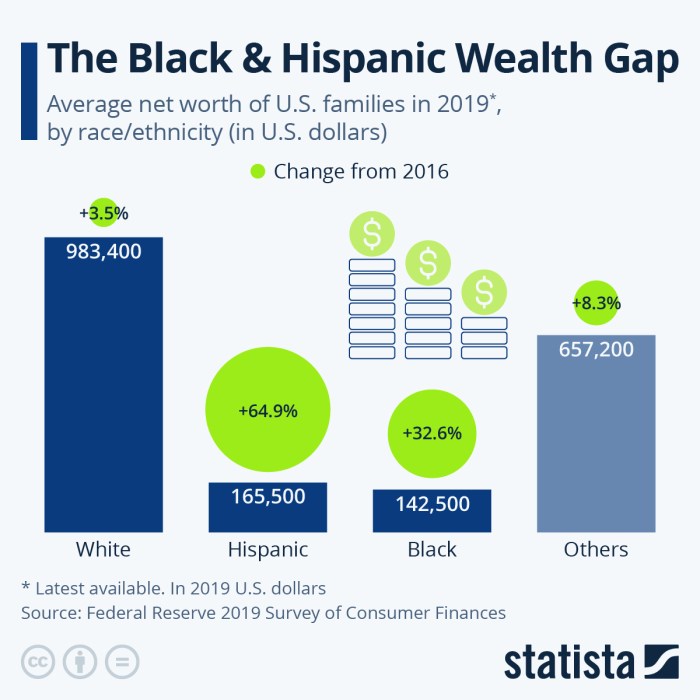
The net worth of African American families has long been a topic of concern in the United States. A range of factors contributes to this disparity, and understanding these factors is crucial for developing effective solutions. At the heart of this issue is a complex interplay of healthcare, family structures, access to education, and social networks. By examining these factors, we can gain a deeper understanding of the challenges faced by African American families and the ways in which they are shaping the financial realities of this community.
The Impact of Healthcare Access and Outcomes
Access to quality healthcare is a fundamental aspect of financial stability for any family. However, African American families face significant barriers to healthcare access, which can have far-reaching consequences for their net worth. The high cost of medical care, combined with lost income due to illness, takes a significant toll on family finances. Consider the case of a single mother working minimum-wage jobs, who is forced to take time off from work to care for a sick child or herself.
This not only exacerbates existing financial stress but also jeopardizes future earnings and savings. According to a study by the Kaiser Family Foundation, African American families are more likely to experience financial strain due to medical debt, with 43% of African American families reporting debt of $10,000 or more compared to 28% of white families.
- The cost of medical care: The cost of healthcare in the United States is notoriously high, and African American families are particularly vulnerable to this trend. A study by the American Cancer Society found that African American households spend a disproportionate amount on healthcare costs, with 45% of their annual income devoted to medical expenses.
- Lost income due to illness: When a family member falls ill, the consequences can be far-reaching. A 2019 report by the Centers for Disease Control and Prevention (CDC) found that African American workers are more likely to experience lost income due to illness, with 45% reporting missed workdays compared to 28% of white workers.
- Healthcare access disparities: African American families frequently face barriers to healthcare access, including lack of insurance, limited provider options, and inadequate healthcare infrastructure. A 2020 study by the National Association for the Advancement of Colored People (NAACP) found that African American neighborhoods have less access to primary care physicians and specialists, exacerbating existing health disparities.
Family Structures and Household Composition
Family structures and household composition can significantly impact the net worth of African American families. Single-parent households, for example, face unique challenges in achieving financial stability due to the increased demands on their time and resources. Additionally, multi-generational households, which are more common in African American communities, can create tensions around financial decision-making and wealth management.
Families with multiple generations under one roof can share financial responsibilities and support one another, but they can also face challenges related to intergenerational wealth transfer and financial decision-making.
- Single-parent households: Single mothers, in particular, face significant financial challenges due to the increased burdens of childcare, household responsibilities, and earning income. A 2019 study by the Pew Research Center found that single mothers in the United States are more likely to live in poverty, with 35% of single-mother households earning below $25,000 compared to 14% of married-couple households.
- Multi-generational households: While multi-generational households can provide valuable support and resources, they can also create financial tensions and conflicts. A 2018 study by the Urban Institute found that households with multiple generations under one roof experience higher levels of financial stress, with 55% reporting difficulty paying bills on time compared to 34% of non-multi-generational households.
- Intergenerational wealth transfer: When families with multiple generations under one roof accumulate wealth, ensuring its transfer to future generations can be a significant challenge. A 2020 study by the Bill and Melinda Gates Foundation found that only 15% of African American families transfer wealth to the next generation, compared to 31% of white families.
The Role of Education in Building Wealth
Access to education is a critical factor in building wealth and achieving financial stability for African American families. Educational attainment is closely linked to job prospects, earning potential, and financial stability. According to a study by the National Bureau of Economic Research, African American workers with higher levels of educational attainment earn significantly more than those with lower levels of education.
Social Networks and Community Relationships, Average net worth of african american families
Social networks and community relationships play a vital role in helping African American families build wealth and achieve economic stability. Strong social connections can provide access to financial resources, expertise, and support, enabling families to navigate financial challenges more effectively.
Financial support from friends and family is a common occurrence in African American communities, highlighting the importance of social networks in building wealth.
- Nurturing social connections: Cultivating strong social connections can provide African American families with access to financial resources, expertise, and support, improving their chances of achieving financial stability. A 2018 study by the Journal of Black Studies found that strong social connections among African American families were associated with improved financial well-being, with 72% of families reporting higher financial satisfaction.
- Community-based financial resources: Community-based financial resources, such as credit unions and cooperatives, can provide African American families with access to affordable financial services and support. A 2020 study by the National Credit Union Administration found that African American households that utilized credit unions reported higher levels of financial satisfaction, with 65% reporting improved financial well-being.
- Financial education and resources: African American families can benefit from financial education and resources, which can improve their understanding of personal finance, budgeting, and investing. A 2019 study by the Financial Industry Regulatory Authority found that African American households that received financial education reported higher levels of financial literacy, with 82% reporting improved financial understanding.
FAQ Insights: Average Net Worth Of African American Families
What role does education play in determining the net worth of African American families?
Research suggests that education plays a significant role in determining net worth, with higher levels of educational attainment correlating with increased wealth accumulation. However, African American families continue to face significant barriers to accessing quality education, exacerbating existing disparities.
How do community land trusts and community development financial institutions contribute to wealth building among African American families?
These organizations provide critical support by offering affordable housing options, financial assistance, and access to capital. By addressing the historical and systemic barriers to wealth accumulation, these initiatives help African American families build wealth and achieve economic stability.
What are some successful programs or policies that have helped increase the average net worth of African American families?
Initiatives such as the Harlem Children’s Zone, which provides comprehensive support to families through education, healthcare, and economic empowerment, have shown promising results. Additionally, policies like the Homeownership and Equity Protection Act of 1994 and the American Dream Downpayment Initiative have helped promote wealth building among African American families.
